



Buying and Selling a Home in Moorhead
Same metro, different state. Crossing the river changes your taxes, your schools and your closing paperwork, and most of it works out fine once somebody walks you through it.
Moorhead, MN · Buyer & Seller Guide
Moorhead is five minutes from downtown Fargo and in a different state, and that second part is the whole story.
People move here for the houses and the neighborhoods and then discover there's a layer of Minnesota underneath all of it. Different property tax system. Different paperwork at closing. A different school district. A homestead application nobody tells you about until the deadline has gone by.
None of it's complicated once somebody lays it out. It's just that a lot of people cross the bridge without knowing any of it's there, and a few of those things cost real money.
I went to school at MSU Moorhead and I'm licensed in both states, which means I can actually work both sides of the river rather than handing you off at the bridge. Here's what I'd tell you over coffee.
What Moorhead Is Like to Live In
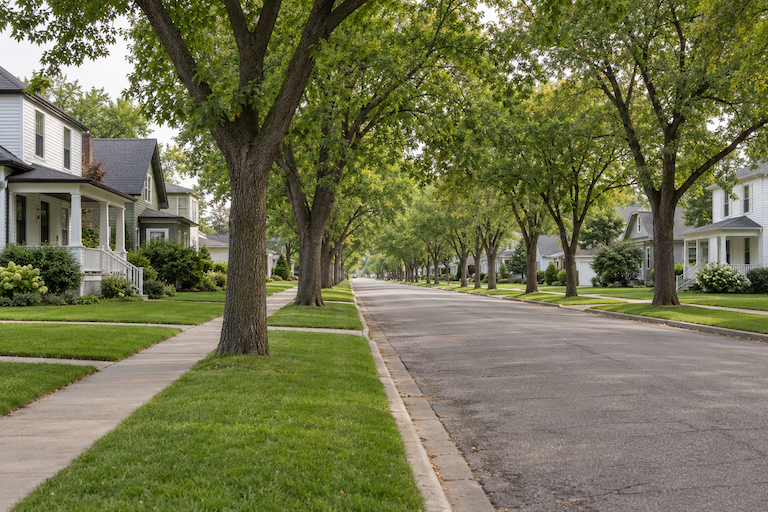
Moorhead is the quieter half of the metro, and people who live here tend to say that like it's the point.
You get the full Fargo-Moorhead experience, the restaurants, the airport, the hospitals, the jobs, without living in the middle of it. Two colleges, MSU Moorhead and Concordia, bring a steady hum of concerts, lectures and games that you can take or leave. There's a long stretch of trail and park along the Red River, and the Hjemkomst Center down by the water is the kind of thing you take visitors to and then feel oddly proud about.
Getting around is easy. You can be across the bridge and downtown in about five minutes, and the drive across town takes about as long. For a lot of families that's the real pitch: Fargo's amenities without Fargo's traffic or Fargo's prices in the places where that's true.
The trade is that it's smaller. Fewer restaurants, fewer options, a little further from the newest retail. Whether that reads as peaceful or as limited depends entirely on you, and I'm not going to pretend there's a right answer.
Crossing the River: What Actually Changes
Moving from North Dakota to Moorhead puts you in a different state tax system, a different closing process and a different set of deadlines. The three that cost people money are the Minnesota homestead application, the deed tax a seller pays at closing, and assuming your income taxes work the way they did before.
This is the part of a Moorhead move that nobody warns you about, so it's the part I spend the most time on.
Homestead classification
Minnesota gives owner-occupied homes a break called the homestead market value exclusion. It shields a portion of your home's value from being taxed, with the benefit tapering off as the value goes up and disappearing entirely on higher-priced homes.
Here's the part that catches people: it isn't automatic. You apply for homestead with Clay County after you buy, and there's a deadline. Miss it and you pay the higher amount for the year. It's a short form and it's easy, and it's probably the single most common thing I see new Minnesota owners forget.
Deed tax, which the seller pays
Minnesota charges a state deed tax of 0.33% of the sale price, and by local custom the seller pays it. On a $300,000 sale that's right around $990 coming out of your proceeds.
North Dakota has no transfer or deed tax at all. So if you've sold a house in Fargo or West Fargo before, this is a line on your closing statement that simply didn't exist last time. It isn't a surprise worth panicking over, but it's worth knowing before you set your number.
Mortgage registry tax, which the buyer pays
On the buying side, Minnesota charges a mortgage registry tax of 0.23% of the mortgage amount. Again, North Dakota has nothing equivalent. On a $240,000 loan it's around $550, and your lender will have it in your estimate.
Income taxes, if you work in North Dakota
Plenty of people live in Moorhead and work in Fargo, and Minnesota and North Dakota have a reciprocity agreement that covers exactly that. Generally your home state taxes your wages, so a Moorhead resident working across the river files in Minnesota rather than filing in both.
There are conditions, and the two states do tax income differently overall, so this is a conversation for your accountant and not for me. I'm flagging it because people assume it'll be a mess and it usually isn't.
The boring ones
New plates, new driver's license, new voter registration. Everybody gets to these eventually. Worth putting on the list before they get away from you.
Worth saying plainly: I'm a REALTOR®, not an accountant or an attorney. Rates and thresholds change, and your situation is your own. Use this to know which questions to ask, then confirm the numbers with Clay County, your lender and your tax professional.
Thinking About Selling in Moorhead
Your buyer pool is bigger than you think, because a lot of people shopping Fargo will cross the river for the right house. The things that decide your outcome are your price against what's actually competing with you, how the house shows, and whether you've got answers ready for the questions a buyer's inspection is going to raise.
Moorhead sellers ask me two things more than anything else. Whether they're missing out by not being on the Fargo side, and what they should fix before they list.
On the first one
Moorhead competes on value and a lot of buyers know it. People shopping the metro are usually looking at both sides, and a Moorhead house that's priced right and shows well doesn't sit because of its zip code. What hurts a listing here is the same thing that hurts one anywhere: a number set on what the neighbor got two years ago rather than on what's on the market this month.
On the second one
This is where eleven years of inspections actually earns its keep. I've walked through thousands of these houses, and I can usually tell you in one pass which items are going to show up on a buyer's report and which of those are worth doing something about before you list.
Not everything is. Some things are cheaper to disclose and price in than to fix. The point of walking it first is making that call on purpose instead of finding out during negotiations.
What I'd have ready before the sign goes up:
- Roof age and the invoice, including whether it was a tear-off or a layover
- Furnace and water heater ages, plus any service records
- Anything you know about water in the basement, what caused it and what was done
- Receipts for exterior work, grading, drain tile, windows or concrete
- Your flood zone status, since in Moorhead the answer has changed over the years and buyers will ask
- A rough number for the deed tax, so your net isn't a surprise at the table
If you're deciding between listing now and waiting, that's a real conversation with real numbers for your block, not a rule of thumb. I'm happy to run it either way, including the version where the answer is that you should wait.
The Different Parts of Moorhead
Moorhead reads as one place from the highway. Living in it, there are a few distinct versions.
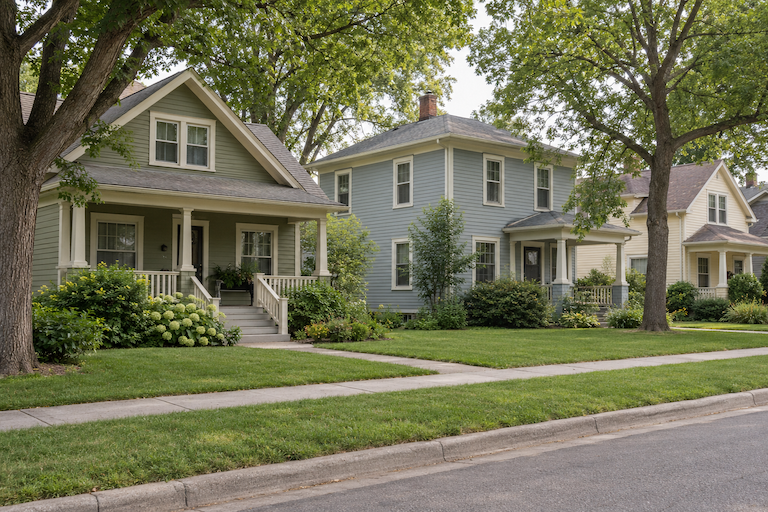
The older grid, north and central
Closer to downtown and the river, with mature trees, sidewalks and houses that mostly date from the first half of the last century into the post-war years. Real character, real charm, and houses that ask a bit more of you. This is where I'm most likely to spend extra time in the basement.
South and east
Where most of the newer building has happened. Bigger lots, attached garages, ranch styles and two-stories from the 1990s forward, and the kind of house that's move-in ready with nothing immediately due. If you want new or close to it, this is usually where we start.
Near the campuses
The area around MSU Moorhead and Concordia has a different rhythm, and a meaningful share of the housing is rented. That's worth knowing whether you're buying to live or buying to rent. Quiet street or busy street can vary block to block here more than anywhere else in town.
Along the river
Some of the prettiest settings in the metro, and the part of Moorhead with the most history behind it. The flood story below applies here more than anywhere, and it's a good story rather than a scary one.
You'll notice I haven't put price ranges on any of this. Anything I wrote today would be stale before long. Ask and I'll pull real numbers for whatever you're actually considering.
What I Look At When We Walk a Moorhead House
I spent eleven years as a home inspector before I sold my first house as an agent, somewhere north of 4,000 inspections. I can't really turn it off.
Here's what I'm doing while you're looking at the kitchen.
On an older place near downtown or the campuses
Basement first, always, with a flashlight. The foundation, how the electrical has been handled across however many owners, and what's left in the furnace and the water heater. Houses of that era are often in great shape. I just want to know which version of great shape we're looking at.
On an older lot with big trees, it can be worth having the sewer line scoped. Roots and clay lines have a long history of disagreeing, and that's a much better thing to learn now.
On a newer house south or east
Grading and drainage, the punch list, and what's still under warranty. New doesn't mean finished, it means finished differently.
On anything that's been a rental
Moorhead requires rental properties to be registered with the city and inspected, which means a rental that's been in the system has a paper trail worth asking about. It also means that if you're buying one to keep renting, registration transfers to you as the new owner and there are forms involved. Good to know going in rather than after.
Water, everywhere
A sump pump running during snowmelt is the system working, not a red flag. Standing water, or a musty smell that never quite clears, is worth a closer look.
One important note: what I notice on a walk-through is a head start on your questions, not a professional inspection. I'll always tell you to hire your own independent, licensed home inspector before you remove your inspection contingency.
The River, and What Moorhead Did About It
Moorhead spent heavily on flood protection after the 2009 flood, removing homes closest to the river and building levees and floodwalls. For some properties that changed the flood insurance picture entirely. Flood zone status here is an address-by-address question, and the answer today may not match what it was fifteen years ago.
If you've only heard about Fargo-Moorhead flooding on the news, you'd think the river is the defining fact of living here. It isn't, and Moorhead is a good example of why.
After 2009, the city bought out and removed a few hundred homes nearest the river and built levee and floodwall systems. Some of that work earned FEMA recognition, which removed the mandatory flood insurance requirement for properties behind it. Homeowners in those areas went from premiums that could run into the thousands to optional low-risk coverage.

What that means practically: don't assume, in either direction. A house near the river isn't automatically a flood insurance problem, and a house away from it isn't automatically clear. It's a specific question with a specific answer for the specific address, and it's one of the first things I check.
Related read: Fargo-Moorhead flood zones: a spring buyer's guide
Schools and Boundaries
Most of Moorhead is served by Moorhead Area Public Schools, which runs Moorhead High School, Horizon Middle School and a set of elementary schools including Probstfield, S.G. Reinertsen, Dorothy Dodds, Ellen Hopkins and Robert Asp.
Some addresses on the edges of town feed other districts, and Dilworth-Glyndon-Felton serves part of the area just east. There are also private and parochial options in the metro that families here use.
The important part is the part I say on every one of these pages: confirm the school for the specific address before you write an offer. Boundaries get redrawn, and listing sheets and school-rating websites aren't official. Check with the district directly, and do it on the actual address rather than the neighborhood.
I'm not going to tell you which school is best for your kid. That's genuinely not my call to make, and the families I work with care about different things. What I can do is help you check the boundary properly so you aren't relying on a rumor.
If You're Buying in Moorhead
Buyers here fall into two groups: people who've always been on this side, and people crossing from North Dakota who are surprised by how much house the money gets them.
If you're in the second group, the things worth doing early:
Before you get too far in:
- Ask your lender to show you a Minnesota estimate, including the mortgage registry tax, so the numbers are real
- Put the homestead application on your calendar for after closing, not in the back of your mind
- Check the flood zone on the actual address, not the neighborhood
- Confirm the school boundary with the district, on the address
- If you work in North Dakota, ask your accountant about reciprocity before you assume anything
- Keep your inspection. Minnesota doesn't require a point-of-sale inspection, so what you learn is what you arrange
None of that's hard. It's just a different list than the one you'd run across the river, and running it early keeps the surprises out of the last week.
Knowing Who to Call
Something clients mention a lot, and it matters more in Moorhead than anywhere else in the metro: a fair number of trades are set up on the North Dakota side, and not all of them work in Minnesota or carry what they need to.
So when you need a roofer, an electrician, a plumber, a foundation guy or an inspector for a Moorhead property, the useful question isn't just who's good. It's who's good and actually works over here.
Eleven years of inspections and a lot of closings since means I've watched a lot of people do a lot of work on houses in this metro. I'm happy to tell you who I've seen do right by people on this side of the river, whether or not you ever buy or sell anything with me.
How I'd Approach a Moorhead Move
- 1
Get the Minnesota math on the table first.
Property taxes with homestead applied, the deed tax if you're selling, the registry tax if you're buying. Ten minutes of arithmetic that changes what number you're actually working with.
- 2
Look at what's real right now.
Not the general market. What's actually listed in the range you're comfortable with, in the parts of town you'd consider, and what it's competing against.
- 3
Walk it with somebody who knows what to look at.
Selling, that means knowing what a buyer's inspector will flag before they flag it. Buying, it means knowing what's worth your attention and what isn't.
Common Questions About Moorhead
They work differently enough that a straight comparison is misleading. Minnesota and North Dakota calculate, classify and credit property differently, and Minnesota's homestead exclusion changes the picture for owner-occupied homes. Rather than guess, compare the actual tax amount on the actual house against the actual house across the river. That's a real number and it's easy to get.
If they're licensed in both states, yes. I'm licensed in North Dakota and Minnesota, so a move in either direction stays with one person rather than getting handed off mid-transaction. It's worth asking any agent you talk to, because plenty of people in this metro are licensed on one side only.
It's how you get your owner-occupied home classified as a homestead, which reduces the value you're taxed on. You file it with Clay County after you buy, and there's an annual deadline. It isn't automatic and nobody chases you for it, so put it on your calendar at closing. Clay County can confirm the current deadline and what they need.
It depends on the address, and the answer has changed for a lot of properties since the flood protection work was built. Some areas that once required it no longer do. Check the specific address rather than assuming based on how close it looks to the river.
Minnesota and North Dakota have a reciprocity agreement, so generally your home state taxes your wages and you file where you live. There are conditions, and this is an accountant question rather than a real estate one, but it's usually simpler than people expect.
Not for an ordinary owner-occupied sale. Some Minnesota cities require a point-of-sale inspection and Moorhead isn't one of them. Rental properties are a different matter: those have to be registered with the city and are inspected, and registration transfers when ownership changes.
Important note: This page is general information about buying and selling in Moorhead and is not legal, financial, insurance or tax advice. Tax rates, thresholds, deadlines, school boundaries and flood designations change. Always confirm the specifics for your own address and situation with Clay County, the school district, your lender, your insurance agent and your tax professional.
Thinking about a move in Moorhead?
No pressure and no rush. Plenty of the people I talk with are months out. We just go through what you're trying to do and what it would actually take.
- What your house is competing against right now, if you're selling
- What's realistically available in the range you're comfortable with, if you're buying
- The Minnesota numbers: homestead, deed tax, registry tax, and what they do to your bottom line
- A former inspector's read on the age and condition of the major systems
- Flood zone and school boundary checked on the actual address
Or call or text (701) 373-5155
Eric D. Christians, REALTOR® · Navy Veteran · Former Home Inspector · Christians Home Crew · Brokered by eXp Realty · Licensed in North Dakota & Minnesota





Privacy Policy / DMCA Notice / ADA Accessibility


