



Buying or Selling a Home in Winter: What the Snow Hides, and What It Shows You
Snow hides a few things worth knowing about a house. It also shows you things a July showing never will. Here's what changes when you buy or sell between November and March around here, from someone who spent eleven winters crawling through Red River Valley basements.
Every October I have some version of the same conversation.
Somebody's thinking about making a move, and they're trying to decide whether to get going now or sit tight until the snow is gone. The assumption underneath the question is usually that spring is the real season and winter is the consolation prize.
I understand why people think that. I just don't think it's true, and I've been through enough winters here to have an opinion about it.
Winter changes some things about buying and selling. A few of them work against you. A few of them work in your favor. The useful part is knowing which is which before you decide.
Should I just wait until spring?
Only if waiting is genuinely better for your life, not because winter is the wrong season. There are fewer homes on the market from November through March, and also fewer buyers competing for them. The people still looking in January tend to be serious. If the right house shows up in December, the calendar isn't a good reason to pass on it.
Here's the honest version. Spring brings more inventory, so you have more to choose from. It also brings more buyers, so you have more people to outbid. Winter flips both of those.
Neither one is better. It comes down to which problem you'd rather have: fewer houses to pick from, or more people bidding against you.
And there's a timing piece people miss. A lot of folks spend the winter getting ready and then list in April, which means spring is when the market gets crowded on both sides at once. Sellers who list in February are often selling into less competition than they would three months later.
What the snow hides
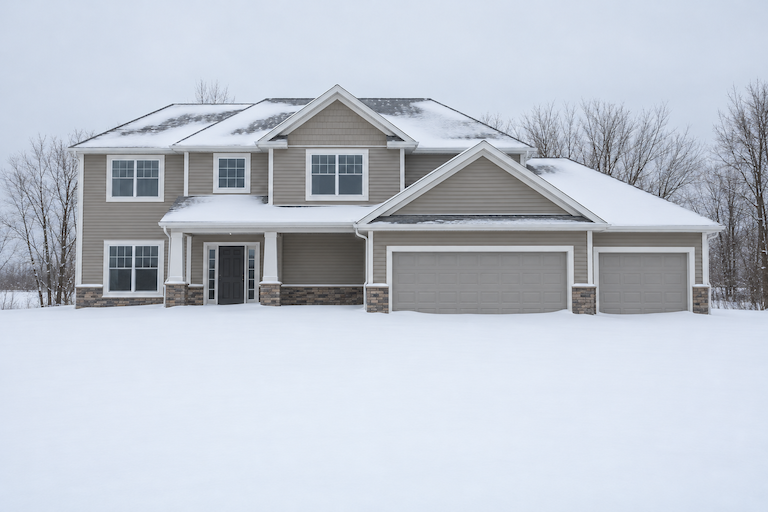
Snow covers the roof, the grading around the foundation, the driveway and sidewalk, and most of the yard. You also can't test air conditioning in January. None of that makes a winter purchase a bad idea. It just means a few questions move from the walk-through to the paperwork.
I spent eleven years as a home inspector, and more than 4,000 inspections, before I sold my first house as an agent. A fair number of those were in February. So I've got a pretty specific list of what I can't see once there's snow on the ground.
What goes under the snow:
- The roof. Shingle condition, flashing, the state of the gutters
- How the ground slopes around the foundation, which is one of the better predictors of a wet basement
- The driveway, sidewalk and steps, including cracking and settling
- Most of the yard, landscaping, and whatever is or isn't under it
- Air conditioning, which can't be properly tested in the cold
So what do you do about it? Mostly, you ask instead of look.
Ask the seller how old the roof is and whether they kept the paperwork from when it was done. An invoice from the roofer tells you the year and what was actually replaced, which beats somebody's best guess. Ask whether the basement has ever taken water and when. Look at listing photos from a different season if the house was on the market before. And if something matters enough, it can be handled in the contract rather than guessed at.
If you're on the selling side, turn that around. Every question a buyer can't answer by looking is one they'll either ask you or quietly answer themselves, usually unfavorably. Having those answers ready before anybody walks through is the cheapest leverage you get all winter.
What winter shows you that summer can't
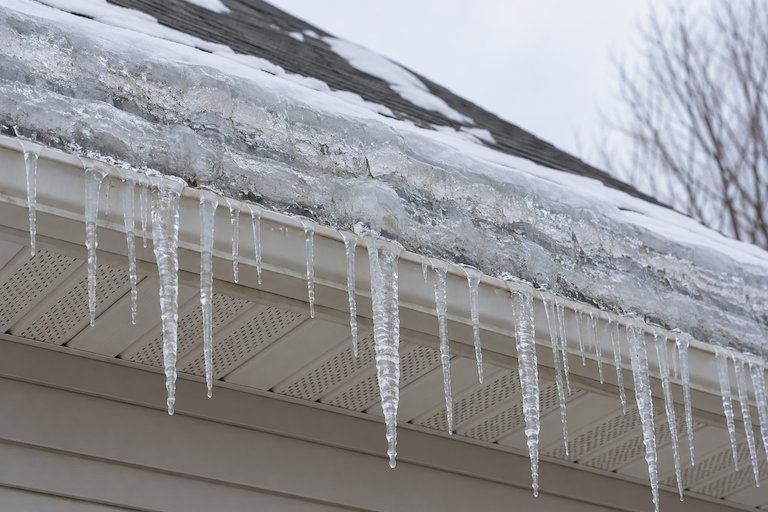
A cold snap is a live test of the things that actually cost you money here. How the furnace keeps up, where the drafts are, whether condensation builds up on the windows, whether there are ice dams forming at the eaves, and how the street and driveway handle snow. You can't learn any of that in July.
This is the part nobody tells winter buyers, and honestly it's my favorite thing about showing houses in January.
In a Red River Valley winter, a house is under load. The systems are working hard and the building is telling you things it would never tell you in June.
Ice dams
Those ridges of ice along the edge of a roof, sometimes with icicles hanging off them, usually mean heat is escaping into the attic and melting snow from underneath. That points at insulation or ventilation. In summer you'd have no idea.
How the furnace actually performs
Anybody can turn a furnace on in September and confirm it runs. Standing in a house at ten below and noticing that the back bedroom never quite catches up is different information.
Drafts and windows
You feel them. Condensation on the inside of windows on a cold day tells you something about the windows, the humidity in the house, or both.
The street, the driveway, and where the snow goes
Is the street plowed well? Is there anywhere to put the snow off the driveway, or does it end up in a pile where you need to park? Does snow slide off the roof onto the walk to the front door? Small stuff, but around here you live with it from November into April.
Sellers, the same list runs in reverse. Buyers get to notice all of it too: the back bedroom that never warms up, the windows that fog, the ice building at the eaves. Worth walking your own house on a cold morning before somebody else does it for you.
Summer shows you what a house looks like. Winter shows you how it works.
If you're selling this winter
You've got less competition than you will in April, and the buyers looking at your house are generally serious rather than browsing. The work is different though. Photos, warmth, light and a clear path to the front door matter more in January than staging a patio ever did in June.
The upside is real. In spring you're one of many. In February you might be one of a few in your price range, and the people walking through aren't killing a Sunday afternoon. They're looking because they need to move.
What actually matters for a winter listing:
- Shovel. Every time. A buyer's first physical experience of your house is the walk from the car
- Keep the heat up during showings, even though it costs you. A cold house feels like a problem house
- Turn on every light, and open the blinds. It gets dark here at five
- Use summer photos if you have them, and say so. Buyers want to see the yard and the roof
- Have the roof, furnace and water heater paperwork ready. You're answering the questions snow creates
- Mats inside the door. People are tracking in slush, and they notice whether you planned for them

What the buyer's inspector is going to run into
This is the part I'd want to know if it were my house. The inspector your buyer hires in February is working with the same snow I am. He can't walk your roof and he can't see your grading either, so the report comes back with a column of items marked unable to evaluate.
That sounds like it works in your favor. In my experience it doesn't. A buyer reads four or five "couldn't evaluate" lines and fills in each blank with the worst thing it could be, and now you're negotiating against somebody's imagination instead of against a known condition. A roof nobody could look at gets priced like a bad roof.
The fix is boring and it's cheap: have the paper ready before you list, so the gaps in the report have answers sitting next to them.
What to pull together before the sign goes up:
- The roof invoice. Year, and whether it was a tear-off or a layover
- Furnace and water heater age, plus any service records you have
- Any history of water in the basement, what caused it, and what was done about it
- Receipts for recent exterior work, grading, drain tile, concrete, windows
- Photos of the house from last summer. The yard, the roofline, the grading around the foundation
A pre-listing inspection is worth considering too, though it's a real decision rather than an automatic yes, because whatever it turns up generally becomes something you have to disclose. For some sellers that's exactly the point, since it's better to find out in November than three days before closing. For others it isn't. It depends on the house and on how much surprise you can tolerate, and it's worth talking through rather than guessing at.
If you're weighing a February listing against an April one, that's a conversation worth having with real numbers for your neighborhood rather than a rule of thumb.
Related read: Home inspection worries: a Fargo-Moorhead seller's guide
If you're buying this winter
Expect fewer listings and less competition. Keep your inspection contingency, since there's more you can't see. Ask more questions about the roof, the grading and past water. And give yourself a little more room in the timeline, because weather moves closing dates.
A few things I'd do differently than I would in June:
- Don't skip the inspection. I'd push you on this in any season, but more so now. There's simply more that a walk-through can't answer
- Ask for documentation on the roof, the furnace and any past basement water. Paper beats a snowy guess
- Look at the house on a cold day if you can. Not a sunny thirty-degree afternoon. A real one
- Build some slack into your dates. Lenders, appraisers, inspectors and movers all get slowed down by weather and holidays
- Remember that the sellers are motivated. Nobody lists a house in January for fun. Something is driving it, and that's often useful to know
Closing in January
The transaction itself works the same. What changes is the logistics around it. Weather delays inspections and appraisals, movers are harder to schedule in a storm, and some outdoor repairs simply can't be completed until the ground thaws, which is usually handled with a holdback or an agreement to complete the work later.
A few practical things that come up this time of year:
- Outdoor repairs. If the inspection turns up something that needs digging, grading or concrete, it may have to wait for spring. That gets written into the agreement rather than ignored
- The final walk-through. Do it, and don't rush it because it's cold. Vacant houses in winter are where frozen pipes happen
- Moving day. Have a plan B. I've watched more than one move get rearranged around a blizzard
- Utilities and heat in a vacant home. Make sure the heat stays on between closing and move-in. This one is boring and it matters more than anything else on this list
First home won at the 11th hour
Leif and Riley had already lost one house and came within five days of losing this one too. They still closed on time, in West Fargo, without paying a dollar extra out of pocket. Timing is something you can plan around rather than just hope about.
How I'd approach it
Figure out whether your timing is driven by your life or by the calendar. Look at what's actually available in your price range right now. Then decide, knowing what winter can and can't show you.
Work out what's really driving your timeline.
A job, a lease, a growing family, a house that no longer fits. Those are real reasons to move now.
Waiting because spring is when everybody moves isn't a real reason, and it's the one I hear most. A lot of people sit through a whole winter on it and end up competing with all those same buyers in April anyway.
Look at what's actually out there.
Not the general market. What exists right now in your price range, in the neighborhoods you'd consider.
Sometimes the answer is that there genuinely isn't much and spring makes sense. Sometimes the right house is sitting there in December with nobody looking at it.
Go in knowing what the season hides.
Buying, that means keeping the inspection, asking for documentation on the roof and any past water, and building a little slack into your dates. Selling, it means having that same documentation ready before the first showing.
Do that and a winter move isn't a compromise either direction. It's just a different set of trade-offs.
Quick answers
Yes, and most of it's unaffected. Interior systems, electrical, plumbing, heating and the basement all get inspected normally. What gets limited is the roof, the grading and the exterior, and air conditioning can't be tested in the cold. A good inspector will note what couldn't be evaluated rather than quietly skipping it.
Not automatically. There's less competition among buyers, which can help you as a buyer, but there are also fewer homes available, which can help you as a seller. It depends far more on your specific house and price range than on the month. That's a numbers conversation, not a rule.
Some will try. The way to take that argument away is documentation: the roof invoice, the furnace and water heater ages, summer photos of the yard and the grading. A buyer who can see the answers has a lot less room to price in a problem that might not exist.
That comes up regularly here and there are normal ways to handle it, including holding money back at closing or writing an agreement to complete the work once the ground thaws. It's a known problem with known solutions.
It can be, and it's worth planning for. Book movers earlier, keep a flexible day in your back pocket, and make sure the heat is on at the new place before anything goes in it.
Usually not, though it depends on your situation. Showings slow down for a couple of weeks, but the people who do look between Christmas and New Year are rarely browsing. Taking it off and relisting also resets your days on market, which isn't always in your favor.

Eric D. Christians, REALTOR®
A Navy veteran, former home inspector, and real estate investor helping buyers and sellers in West Fargo, Fargo, Moorhead and the surrounding communities. When you work with Christians Home Crew, you work with Eric. First conversation through closing, not passed between team members.
Important note: This article is general information about buying and selling in the Fargo-Moorhead area and is not legal, financial, or insurance advice. Market conditions change, and every property and situation is different. Always work with your own licensed home inspector, lender, and insurance agent on a specific home.
Thinking about a move before spring?
No pressure and no rush. Plenty of the people I talk with are months out. We just go through what you're trying to do and what it would actually take.
If you're thinking about selling:
- What your house is competing against right now, and what it would be competing against in April
- A former inspector's walk-through of what a buyer's report is likely to flag
- What paperwork to pull together before the sign goes up
If you're thinking about buying:
- What's realistically available in the price range you're comfortable with right now
- A former inspector's read on the age and condition of the major systems
- Property taxes, special assessments, and the rest of your monthly number
Or call or text (701) 373-5155
My observations come from a former home inspector's perspective and do not replace an independent professional home inspection.